







As a bank or credit union marketer, you know how important it is to attract potential customers to your website. One of the best ways to get people to your website is by ranking high on Google, but this is much easier said than done.
Without a load of keyword-friendly content to boost your ranking, chances of being found on Google organically are slim. But having good, SEO-rich content on your website can be the difference between ranking #1 on Google and being lost in the sea of search results.
So how can you publish enough content to rank higher? Here are some ideas.
1. Start a blog, and publish consistently
Having a blog is a great way to publish SEO-friendly content online. Your blog can be a go-to resource for financial advice, savings ideas, banking topics, and more. The more keyword-rich articles you have, the higher your chance of ranking on Google and seeing more website traffic.
If you already have a blog or decide to start one, make sure to post consistently. Consistency is key when it comes to ranking and showing Google that your website is trustworthy. You can post one, two, or even three articles a week, but try to post on the same days each week and stick to your regular schedule.
Bonus tip: Create some fun downloadable guides (often called lead magnets) and attach them to your blog articles. These lead magnets are a way for you to collect information from your potential customers and build a relationship with them.
2. Create a video or podcast series
Another way to engage your audience and keep them coming back for more is by creating a helpful video or podcast series. These videos or podcasts might be similar to your blog posts and downloadable guides, just in video or audio format. Or they may have nothing to do with banking but serve to introduce potential customers to your brand and keep your bank or credit union top of mind should they ever need financial help. Check out Renasant Bank’s SEC Shorts for a great example.
You can make videos on how to save for a house downpayment, how to invest in a Roth IRA, how to help kids save for college, and so much more. Your videos can accompany a blog series or they can live separately on your website. For extra SEO juice, you should post the video and give a transcription below that can be read by Google more easily.
These videos can be shared in several ways, including social media, your website, a newsletter, and more. The bottom line is that videos are a great way to catch your audience’s attention and keep them hooked. For even better engagement, keep your videos entertaining and fun. People are more likely to watch videos that make them laugh while still teaching them important topics.

3. Release an interactive course
Want to go a step further? Release an interactive course that helps your audience learn about financial topics in a fun, hands-on way. For example, you could make a financial literacy course or a course teaching homeowners how to refinance their home. There are so many topics to choose from and so many different ways to help your audience.
These courses should be informative, fun, and easy to follow. You could even give a certificate of completion when someone finishes the course, or have some kind of incentive.
If you don’t want to go through the hassle of creating your own interactive financial literacy course, you could sponsor a school on Banzai. Banzai makes financial literacy fun and has helped thousands of students around the country learn about and apply financial topics in their lives.
4. Design some fun infographics
Your audience probably pays closer attention to visual content than they do to text content. So why not throw some fun infographics into the mix? Infographics aren’t very complicated; they’re simply a way to combine information and graphics to catch your audience’s attention. Infographics make it easy to relay complex banking information, like how to apply for a loan or save for college, while keeping your audience’s interest.
If your financial institution has a resident designer, great! Infographics may be just up their alley. Otherwise, there are plenty of tips and tricks online for how to design an infographic, as well as plenty of resources like Canva. You can even hire a third-party designer if you don’t think you can do your infographic justice.
When you hear the term “how to get found on Google,” you probably think of a blog article or SEO-friendly webpage. These are great for ranking on the main Google page, but you don’t want to forget about Google Images, which is another way to bring people to your website. Infographics can help your bank rank on Google Images, which may help you see more website traffic and even rank higher on Google elsewhere.
Sound like a lot? Hire BankBound
If creating all this content sounds like a lot of work, that’s because it can be. And if you’re a marketing team of only one or two people, this may even seem like an impossible task. You have so many other priorities, how are you supposed to find time to write blog articles and video scripts?
Luckily, you don’t have to.
BankBound is an online marketing agency whose mission is to help local financial institutions grow. BankBound works exclusively with banks and credit unions, so they know a lot about the financial industry.
BankBound serves as an extension of your marketing team and gives you the content you need to take your website and SEO game to the next level. These professional financial marketers have years of experience working with banks and credit unions, and with their help, your marketing team can focus more on its strategy and execution rather than creating tons of content.
To learn more about how BankBound can turn your small marketing team into a content-producing marketing machine, start a conversation.
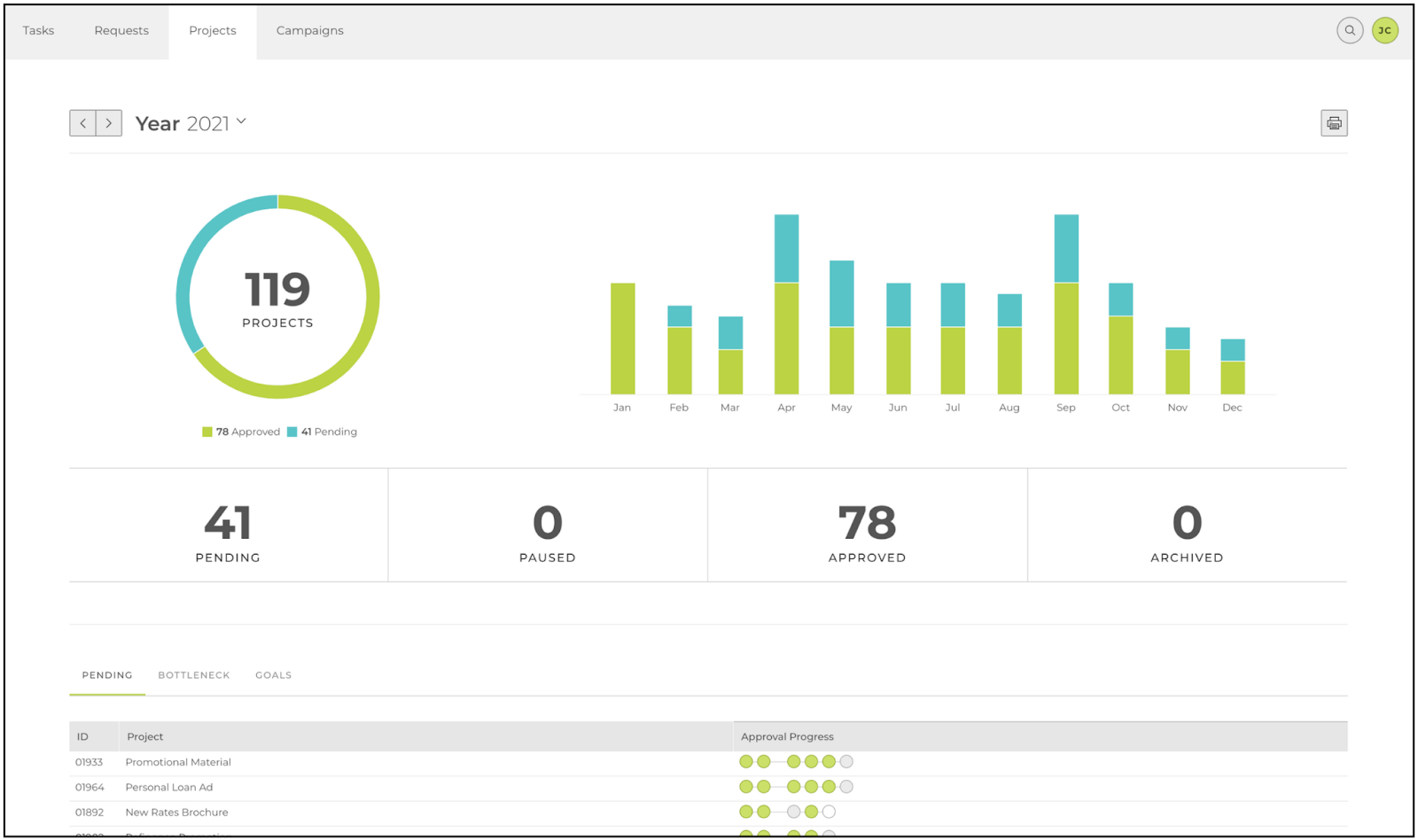
Use Kadince to track all your marketing projects
Both Kadince and BankBound can help your marketing team stay on top of content and approvals, so why not use them together?
Del Norte Credit Union’s marketing team has been using Kadince since 2019 and has been using BankBound since late 2020. The BankBound team writes monthly blog posts for the credit union, and these blog posts are submitted through Kadince for internal approvals and suggested edits. Since using BankBound, Del Norte Credit Union has seen better bounce rates and steady stats across its site.
According to Kirstin Smith, Del Norte’s marketing specialist, Kadince makes the credit union’s approval process quicker and easier to manage. She said, “Kadince even makes it easy to get approvals from other departments in the credit union, including compliance!”
When you use Kadince, marketing and fair lending exams are a breeze. Kadince archives all your marketing projects, so all the data you need to give an examiner or to answer their questions is ready to go.
Kadince is also perfect for approving and reviewing marketing tasks. Just upload your marketing projects to Kadince (like a blog article from BankBound), and Kadince will create and send tasks to proper approvers to review suggested changes, complete a compliance checklist, post to social media, and more. Kadince also reminds approvers of any outstanding approval tasks, so you’ll never have to chase down Bob and ask for a review again.
To learn more about Kadince, schedule a personalized demo.
To learn how Kadince could save your marketing team 30+ hours each week, check out this article.
None of Kadince, Inc., its affiliates, or its respective employees, directors, officers, and agents (collectively, “Kadince”) are responsible or liable for any content or information incorporated herein. Read full disclosure.
None of Kadince, Inc., its affiliates, or its respective employees, directors, officers, and agents (collectively, “Kadince”) are responsible or liable for any content or information incorporated herein. Read full disclosure.

By: Jaidyn Crookston | February 22, 2022